
Should You Keep House Hunting During the Holidays?
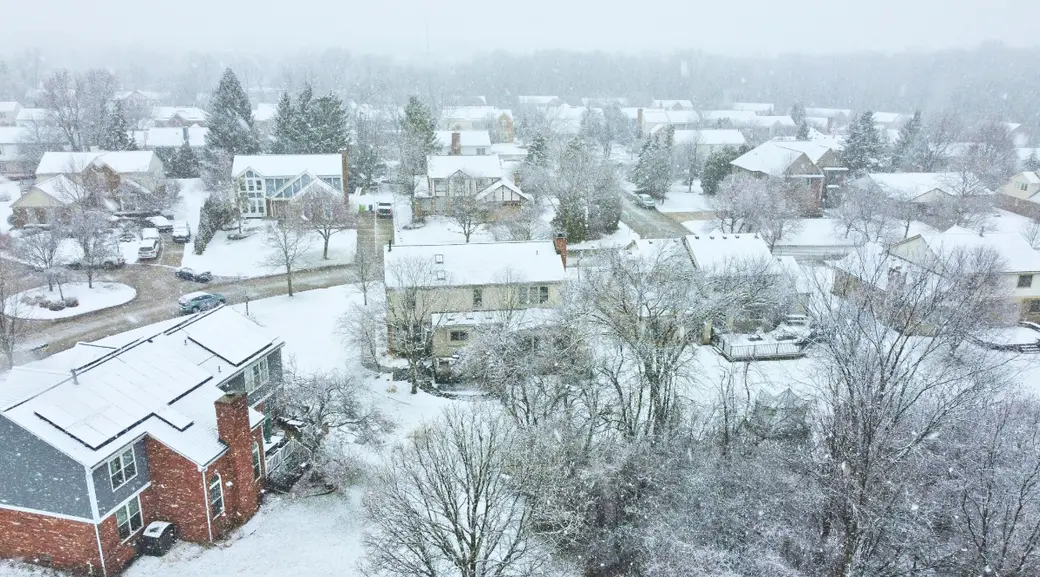
There is a point every fall when house hunting starts to feel like something you should probably put off until spring.
The weekends fill up. The days get shorter. Thanksgiving is coming. Then suddenly you’re trying to imagine fitting a home inspection somewhere between a work party and ordering gifts.
So you close the real estate apps and decide you’ll start again after the holidays.
That might be exactly the right decision if you need the break.
But if you still want to buy a home, there isn’t necessarily a market reason to stop looking.
In fact, November and December can tell you some things about a house, a seller and even your own priorities that are harder to see at other times of year.
The Holiday Market Is Quieter. It Isn’t Empty.
Real estate has seasons.
More homes typically come onto the market during the spring and summer, when longer days, school calendars and moving schedules make buying and selling easier for many households.
As the holidays approach, that activity usually slows.
Some sellers decide to wait until spring.
Some buyers do too.
That creates an interesting tradeoff for the people who remain.
You may have fewer homes to choose from, but you may also be competing with fewer buyers for them.
That doesn't mean every November or December listing will be negotiable. Rhode Island continues to have a relatively limited supply of housing, and desirable homes can attract significant attention regardless of what the calendar says.
But the pace can feel different.
And for a prepared buyer, different can sometimes create opportunity.
The Sellers Who Stay on the Market May Have a Reason
There is a popular piece of real estate advice that says holiday sellers are motivated.
Sometimes they are.
But we wouldn't build an offer strategy around that assumption.
A seller may be relocating for work.
They may already have another home.
They may be handling an estate.
They may simply prefer selling now rather than waiting several months.
Or they may have absolutely no urgency and be perfectly willing to wait for the price and terms they want.
A November listing tells us that the seller chose to put their home on the market in November.
That's useful information.
It isn't enough information.
Just as we discussed when looking at days on market, our job is to understand the story behind the listing before deciding what kind of negotiating position a buyer actually has.
A House Feels Different During the Holidays
There is another reason we like looking at homes this time of year, and it has very little to do with market statistics.
You can see how people actually live in them.
Where do the coats go when everyone walks through the door?
Could six or eight people actually sit around the dining table?
Is there somewhere for someone to stay overnight?
Does the kitchen still feel functional when you imagine cooking a holiday dinner?
Is there a comfortable place for everyone to gather, or does the layout suddenly make less sense when you picture actual people in it?
Even if your life doesn't involve big holiday gatherings, the season has a way of making us think about home differently.
A listing can tell you that a house has 2,400 square feet, four bedrooms and an open-concept floor plan.
Walking through it while you're thinking about the people you love can tell you something else entirely.
Can I picture our life happening here?
That's a useful question in any season.
Sometimes it's simply easier to answer this time of year.
Winter Also Shows You Things Summer Can Hide
A beautiful June showing has its advantages.
So does a cold November afternoon.
You may get a better sense of how the house holds heat. You can notice drafts. You can see how much natural light actually reaches the rooms when the days are shorter.
You may see drainage issues, depending on the weather. You can observe the condition of gutters and exterior surfaces after leaves have fallen. In New England, you may also get a much clearer look at the property itself once landscaping isn't doing quite as much of the visual work.
None of this replaces a professional home inspection.
And a single showing can't tell you how a house performs throughout an entire winter.
But seeing a property during less forgiving weather can give you useful questions to ask.
There Can Be Practical Challenges Too
Buying during the holidays isn't automatically easier.
Scheduling can become complicated.
Inspectors, attorneys, lenders, appraisers, real estate professionals, municipal offices and other people involved in the transaction may have holiday schedules or planned time away.
Weather can interfere with inspections or make parts of a property more difficult to evaluate.
If you're trying to close by a particular date, there may be fewer business days available to get everything accomplished.
That doesn't mean you shouldn't buy.
It means the timeline deserves attention.
If we know early that Thanksgiving, Christmas, New Year's Day or someone's travel schedule falls inside the transaction, we can build around it rather than discovering the conflict later.
Fewer Buyers Doesn't Mean No Competition
This is probably the biggest misconception about holiday home buying.
Yes, there may be fewer people actively shopping.
But there may also be fewer good homes available.
If ten buyers pause their searches and ten sellers decide not to list until spring, the remaining buyer hasn't necessarily gained an advantage.
And when a particularly desirable home does come onto the market, the serious buyers who are still looking may notice it quickly.
That is especially relevant in Rhode Island, where housing supply has remained constrained even as inventory has improved.
So we wouldn't advise a buyer to become aggressive simply because the calendar says December.
We would look at the property.
How long has it been available?
Has the price changed?
What have comparable homes sold for?
What else is currently competing with it?
What do we know about the seller's priorities?
Are other buyers interested?
Then we build the offer from there.
What If You Don't Find Anything?
Then you don't.
This may be the most important reason to stay engaged without becoming overly attached to the idea that you must buy before the end of the year.
You can keep looking without forcing a decision.
If the right house appears in November, you're ready.
If it appears in December, you're ready.
And if nothing feels right, you enter the new year knowing more about neighborhoods, prices, property types and your own priorities than you knew before.
House hunting doesn't have to be a constant sprint toward a closing.
Sometimes you're gathering information.
Sometimes you're narrowing the search.
Sometimes you're learning what you thought mattered but actually doesn't.
And sometimes a house surprises you.
So, Should You Keep Looking?
If you're exhausted, take the break.
If your finances aren't ready, get them ready.
If life is simply too full right now to make a major decision thoughtfully, the houses will still be there when you're ready to come back.
But if the only reason you're thinking about stopping is because you've heard that “nobody buys houses during the holidays,” we wouldn't let the calendar make the decision for you.
There may be fewer listings.
There may also be fewer buyers.
Some sellers may have reasons to negotiate. Others won't.
And somewhere among the quieter market, shorter days and houses that look a little more lived-in than they do in June, you might learn something important about what you actually want from a home.
You don't need to buy before the holidays.
You don't need to wait until spring either.
You just need to be ready when the right house shows up.
Holiday Home Buying FAQs
Is November a good time to buy a house in Rhode Island?
November can offer buyers less competition than the peak spring and summer seasons, but inventory may also decline as fewer sellers list their homes. Whether it is a good time to buy depends on the available properties, the buyer's readiness and local market conditions.
Are home sellers more motivated during the holidays?
Some sellers who list or remain on the market during the holidays may have timing considerations that make them open to negotiation, but holiday timing alone does not establish seller motivation. Buyers should evaluate the individual property's history and circumstances.
Are houses cheaper in December?
Seasonal changes can affect asking prices and buyer competition, but buyers should not assume every December property will be discounted. Rhode Island's limited housing supply can continue to support prices even during slower months.
Is there less competition when buying a home in winter?
Buyer activity generally slows after the peak home-buying season, which can mean fewer competing buyers. However, fewer homes may also be listed, so desirable properties can still receive substantial interest.
Is it harder to close on a house during the holidays?
Holiday schedules can affect inspections, appraisals, lending, attorneys, municipal offices and other parts of a real estate transaction. Buyers and sellers should identify important dates early and build realistic timelines into the purchase agreement.
Still Looking This Holiday Season?
Keep sending us the houses.
You don't need to decide today whether you'll buy before the end of the year or wait until spring.
We'll keep watching the market with you, help you understand what we're seeing and investigate the properties that catch your attention.
If the right one doesn't appear, we'll keep looking.
And if it does, you'll be ready.
The Sarji Team at Gold Door Realty serves buyers and sellers throughout Rhode Island and nearby Massachusetts, including the Blackstone Valley and Greater Attleboro areas.
Categories
Recent Posts









GET MORE INFORMATION